Tuesday, March 26, 2019

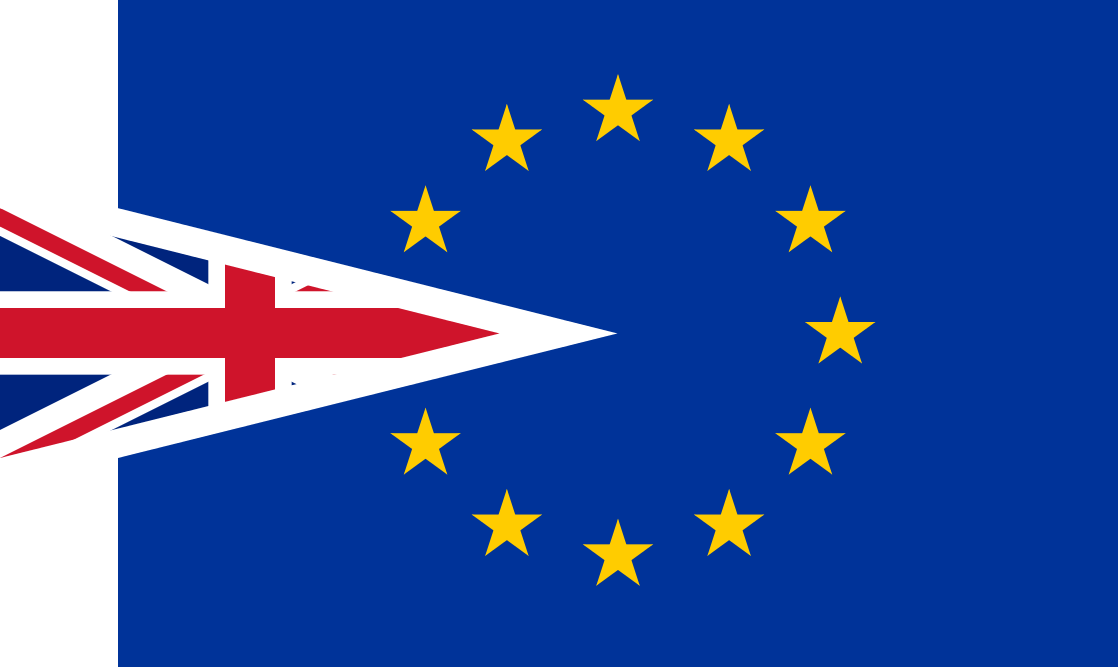
The meaning of Theresa May's one legitimate Red Line

A Federal Trust blog
by Ira Straus
Chair, Center for War-Peace Studies


Of all Theresa May’s red lines, one and only one is legitimately termed “Red”: the one that prohibits any Brexit that divides the United Kingdom. It is Red as it is a vital national interest, indeed the foremost of all national interests. Anything that promotes the break-up of the country might, in ordinary conditions, be seen as treasonous, a term that should not be thrown around lightly, nor also ceded to the spinners of romantic fairy tales.

t is a red line that prohibits the wishes of the hard Brexiters. It is a red line that prohibits many of the other, alleged red lines. And it is a red line that prohibits a critical portion of Mrs May’s own policies.

READ MORE AThttps://fedtrust.co.uk/the-meaning-of-theresa-mays-one-legitimate-red-line/

Image: Results by council district (GB) & UK Parliament constituency (NI) 
  Leave
  Remain

Saturday, December 22, 2018

Which “colonial master” would Britain prefer, Europe or America?

A Federal Trust blog
by Ira Straus
Chair, CWPS

Boris Johnson spoke truthfully when he said the Brexit Deal will leave Britain a colony of the EU: subject to most of its laws but with no share in making them. Let us proceed from this reality, even if he does not accept the underlying reality: that if flows from the inherent nature of Brexit.

The basic options for Britain’s future are three. Either stay in the EU as a Member State. Or join the U.S. as a member State. Or stand alone and find itself in a semi-colonial status -- an economic semi-colony of the EU, a military semi-colony of the U.S.

READ MORE AT http://fedtrust.co.uk/which-colonial-master-would-mr-johnson-prefer-europe-or-america/

Wednesday, December 12, 2018

Theresa May on the Couch

Marching over the cliff, chanting ‘it’s our duty’
A blog piece of the Federal Trust for Education and Research
by Ira Straus, Chair of the Center for War-Peace Studies

Everyone has their mental blocks –thoughts and fears that hold their minds hostage. The Prime Minister's mental blocks on Brexit are holding her entire country hostage; a tragic situation, hostage to a policy she herself believes is harming it. Can anyone help her get past the blocking thoughts? ...

READ MORE AT  http://fedtrust.co.uk/theresa-may-on-the-couch/

Saturday, December 8, 2018

NO DEAL, NO BREXIT, OR MAY’S BREXIT

Getting to legitimate procedures for voting among the options
by Ira Straus
Chair, Center for War-Peace Studies

In the 1990s, as Executive Director of The Democracy International, Dr. Straus gave close attention to consequences of independence referenda in post-Communist countries including Bosnia.

Referendum theory indicates there should be a second referendum on the several options. Modern representative democratic theory, and the British constitutional tradition, indicates that Parliament should deliberate on all options and set up its own procedures for choosing among them.

Either way, all options need to be considered. This immediately raises basic questions: How to winnow down the options for a process of voting? In what order to vote among them?

In the present case, the options are getting winnowed down to three: the PM’s Brexit Deal, No Brexit, or a No-Deal Brexit. The procedure is probably coming down to a Parliamentary vote on the PM’s Brexit, followed, if her deal is rejected, by a popular vote on the remaining two options...

READ MORE AT  http://fedtrust.co.uk/no-deal-no-brexit-or-mays-brexit/

Tuesday, September 18, 2018

Thursday, July 19, 2018

Read our Chair of the Board Ira Straus's article about why the U.S. benefits from NATO, a cornerstone of transnational organizations and global security: NATO: The Greatest Bargain America Ever Got (https://nationalinterest.org/feature/nato-greatest-bargain-america-ever-got-25626)


Wednesday, May 16, 2018

Trump should use the Iran deal's provision for making sanctions “snap back”

by Ira Straus 

 The Trump Administration wants to hit Iran as hard as it can with sanctions. However, it has neglected to use the provisions of the Iran deal itself for doing this. In stating that it is withdrawing from the deal, it seems to be giving away for free its standing to invoke these provisions in the future. This is troubling, and self-defeating.

 Thanks to the pressures that skeptics had placed on the Obama Administration during the negotiations for the deal, a provision was included for sanctions to “snap back” if any major party to the deal insisted on declaring Iran in non-compliance. All other parties to the deal, and indeed the entire global community, would then be legally obligated to join in reimposing sanctions.

Tuesday, May 15, 2018

What is the “snap back”?


The extent to which it solves the problem of the Iran deal; its merit as a precedent for better management of sanctions

by Ira Straus

(First Publish in 2015)

The Obama Administration stated many times, in the course of negotiating the Iran deal, that sanctions would "snap back" if Iran cheats. It did not however specify how this would happen.

A lot of people were skeptical that this could ever happen. They pointed out that it had been hard to get the necessary countries to agree on sanctions in the first place. It took years. Some of these countries have made it clear that they want to be rid of the sanctions and would not agree to reimpose them, were they ever lifted. These countries have a veto on the UN Security Council (SC). So if the sanctions are lifted now, they will in fact never be reimposed. Moreover: once sanctions are lifted, economic links will be developed rapidly, economic interests will become attached to these links, further preventing governments from agreeing to reimpose sanctions. So how could sanctions ever simply “snap back”?